



Best Procore Alternative for Subcontractors in 2026

Best Procore Alternative for Subcontractors in 2026
Procore is the dominant name in construction software — but it was designed for general contractors managing large, multi-million-dollar projects with dedicated project managers, document control teams, and IT support. If you run a subcontracting company, you've probably already run into the problem: the platform is enormous, the pricing is opaque, and adoption on the field is close to zero because your crews didn't sign up to learn enterprise software.
This article is for subcontractors — electrical, plumbing, civil, roofing, concrete, HVAC — who need something that actually works on a job site, on a phone, in poor network conditions, without a two-day onboarding session. We'll compare Procore to Kraaft, explain the key differences, and help you figure out which tool fits your team.
Why Procore Doesn't Work for Most Subcontractors
Procore's pricing is tied to your annual construction volume — not your headcount. That means even a small subcontractor doing a few million a year can face invoices in the thousands of dollars per month. And you're paying for tools your crews will never use: owner contracts, budget forecasting, RFI workflows designed for the GC side of the table.
Beyond cost, the bigger problem is field adoption. Procore's interface is built for desktop use by office-side project managers. Your foreman on a road construction site or your electrician running cable in a new build isn't opening a laptop to log a daily report. They have a phone, five minutes at the end of a shift, and zero patience for a 47-step workflow.
The result: you pay for Procore, your project manager uses it to share files, and your field crew keeps using WhatsApp. Nothing gets centralized. Nothing is traceable.
What Subcontractors Actually Need
After talking to hundreds of subcontracting companies, the requirements are consistently the same: fast communication between office and field, photo documentation with timestamps and location, easy daily reports (ideally voice-first), and a way to keep all site information in one place without requiring training. Anything beyond that is overhead.
Kraaft was built specifically around this list. It's a mobile-first platform designed for field crews — the kind of app your team will actually open on-site, not just promise to use.
Kraaft vs. Procore: The Key Differences
Procore covers photos, floor plans, planning, and integrations — but it's desktop-primary, has no team messaging, and has no voice reporting. Onboarding takes days to weeks. Pricing is based on your annual construction volume and typically lands between $400 and $1,200+ per month. It was built for GCs, not subs.
Kraaft covers the same core features — photos with GPS and timestamps, floor plan pinning, planning, SharePoint and ERP integrations — and adds team messaging, voice reports, AI-generated report summaries, and full offline mode. It's mobile-first, takes under 30 minutes to set up, and starts at $25 per user per month with transparent per-seat pricing.
What Makes Kraaft Different
It looks like WhatsApp — on purpose
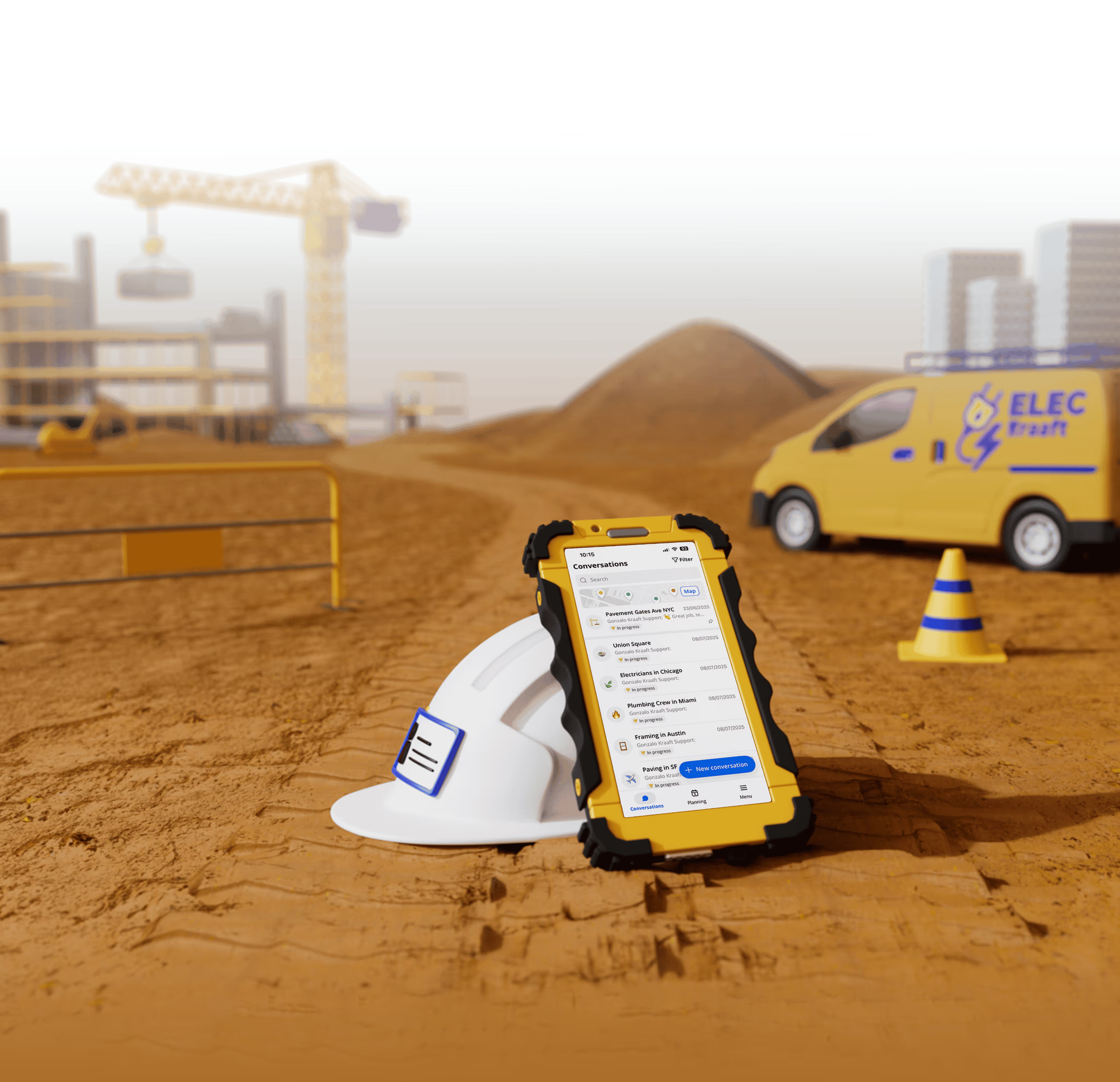
The biggest reason field crews don't adopt new tools is unfamiliarity. Kraaft's messaging interface mirrors the apps your team already uses every day. The learning curve drops to near zero, which means you actually get adoption — not just a license no one opens.
Voice and photo reports from the field
Your foreman isn't going to fill out a typed daily report at the end of a 10-hour day. With Kraaft's voice reports, they hit record, speak for 60 seconds, and the platform transcribes and formats it into a professional PDF. Photos taken on-site are automatically geotagged and timestamped. Your office gets a structured daily report without anyone sitting down to write one.
All site info in one place
Kraaft creates a dedicated workspace for each job site — a conversation thread, a floor plan layer with pinned photos and annotations, a document folder, and a task list. Everything in one place, accessible offline, synced the moment you're back on signal.
AI that actually saves time
Kraaft's AI agents can summarize site activity, draft reports from voice notes, and flag anomalies across projects — without you building a prompt library or hiring a data analyst. It's built into the workflow, not bolted on.
Who Should Still Use Procore
Procore makes sense if you're a general contractor managing complex projects with large teams, multiple subcontractors, and a need for deep document management, budget tracking, and owner-facing reporting. If you have a dedicated project manager whose job is working inside the platform all day, Procore is the right tool.
If you're a subcontractor — even a large one — where most of your value comes from what happens on the field, and your crew needs to be productive with a phone in their hand, Procore is solving problems you don't have.
The Bottom Line
Procore is the right answer for the wrong question. The right question for most subcontractors is: how do I get my field crew to document their work consistently, communicate in real time, and give my office visibility into what's happening on each site — without fighting the tool to do it?
That's exactly what Kraaft is built for. Used on 900,000+ job sites in 14 countries, by companies like Bouygues, Vinci, and hundreds of subcontracting firms that tried the enterprise platforms first and switched.
Try Kraaft free — no credit card required, up and running in under 30 minutes.
Frequently Asked Questions
Is Procore good for small subcontractors?
Procore can work, but it's generally overbuilt and overpriced for small subcontractors. Its pricing model (based on construction volume) and complexity tend to be a poor fit for teams under 50 people who need something simple that works on a phone.
What is the best Procore alternative for field crews?
For field-first teams, Kraaft is the strongest alternative. It's built for the phone, supports voice and photo reports, works offline, and requires almost no training. Other options worth evaluating include Fieldwire (strong on floor plans and punch lists) and Raken (focused on daily reports).
How much does Kraaft cost compared to Procore?
Kraaft starts at $25/user/month with transparent per-seat pricing. Procore pricing is based on your annual construction volume and typically ranges from $400 to well over $1,000 per month, excluding implementation and training costs.
Does Kraaft work offline?
Yes — Kraaft is fully functional without a network connection. Photos, messages, and reports are synced automatically once a connection is restored. This is critical for underground work, remote sites, and areas with poor signal.

Reconnect the site
and the office