



Browsing GetApp for construction software? Here's what those lists won't tell you

Browsing GetApp for construction software? Here's what those lists won't tell you
If you've typed "construction software" into Google recently, you've probably landed on GetApp. It's a review directory with 500+ construction tools, star ratings, feature checklists, and "best of" lists for every category you can think of.
It's a decent starting point. But here's the problem: a feature checklist can't tell you the one thing that actually decides whether software works on a construction site.
Will your crews actually use it?
Why most tools on those lists fail in the field
Scroll through any GetApp category page and you'll see the same pattern. Bid management. Cost tracking. Document control. Gantt charts. Dashboards on dashboards.
All of that is built for the office. None of it is built for a foreman standing in the rain with gloves on.
So what happens? The company buys the platform, the office uses 20% of it, and the field goes right back to WhatsApp, phone calls, and photos buried in someone's camera roll. The software gets a nice review from the project manager who bought it — and zero adoption from the people doing the work.
That's the gap review sites can't measure. Ratings come from buyers, not from crews.
The test that actually matters
Before you trust any star rating, run three checks (we wrote a full breakdown in our guide to the best construction software, but here's the short version):
Hand the app to your most old-school foreman — if he can't use it in 10 minutes, you're buying shelfware. Take photos of work in place and try to find them three days later by job and location. Then kill the Wi-Fi and see if the crew can still log work.
Most of the platforms topping those comparison lists fail at least one of these.
Where Kraaft fits
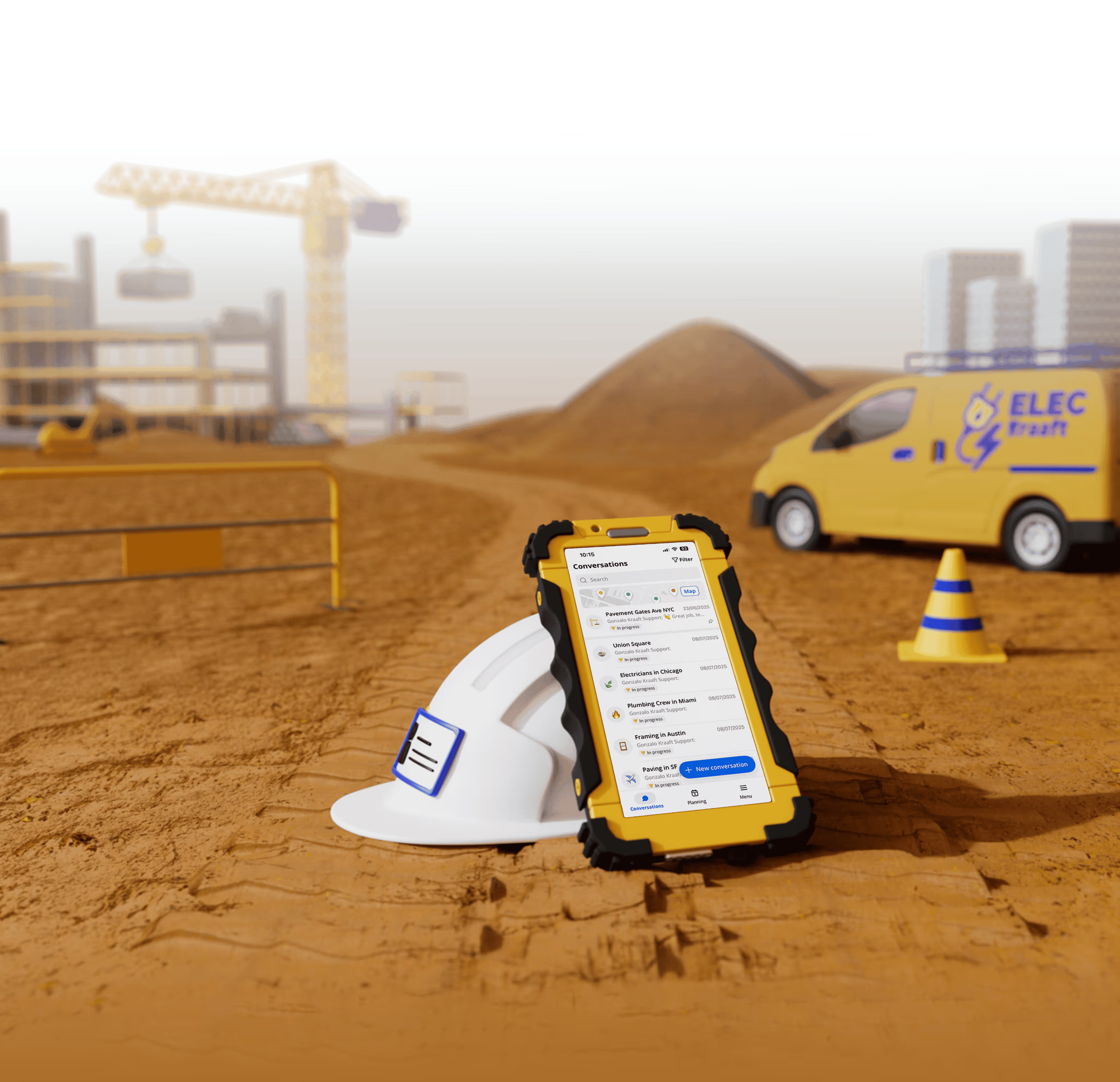
Kraaft takes the opposite approach. It looks and feels like the group chat your crews already use — except every message, photo, and report is automatically organized by project, geotagged, time-stamped, and visible to the office in real time.
No training. No "digital transformation roadmap." Crews open it because it works like messaging, and project managers keep it because the documentation builds itself.
That's why it has replaced WhatsApp on more than 900,000 jobsites across 14 countries, and why groups like VINCI Construction run it across their subsidiaries.
A few things you won't find on a feature checklist:
It's built field-first, not office-first. Most construction software is designed for GCs and pushed down to crews. Kraaft was built for the people who actually run the day-to-day on site — and the office gets clean, structured data as a byproduct.
Reports write themselves. Daily logs, snag lists, and site reports are generated from the photos, voice notes, and messages your team already sends. Nobody stays late re-typing the day into a form.
It works where your sites are. Basements, tunnels, rural jobs — Kraaft works offline and syncs when you're back in coverage.
It plays nice with what you already have. Using Procore, SharePoint, or another platform in the office? Kraaft connects to it. The field stays simple, the office stays powerful.
So should you skip the review sites?
No — use them. Build your shortlist. Compare pricing. Read the one-star reviews (always the most honest ones).
But before you sign anything, put the app in a foreman's hands for a week. That trial will tell you more than 500 reviews ever will. And if you want to see how the field-first category compares before you start, our 2026 guide to communication tools for construction field teams covers it honestly — competitors included.
Or skip ahead: book a demo and hand Kraaft to your hardest-to-please crew. We're confident in how that goes.

Reconnect the site
and the office