



Construction's Digital Moment: Why the Job Site Is Finally Catching Up

Construction's Digital Moment: Why the Job Site Is Finally Catching Up
There's a running joke in the construction industry: it's one of the last sectors where paper still wins. Blueprints printed and rolled under an arm. Punch lists on a clipboard. Site diaries handwritten at the end of a long day, transferred to a spreadsheet back at the office — if they get transferred at all.
The joke isn't entirely wrong. According to McKinsey, construction is one of the least digitized industries in the global economy, ranking just above agriculture. Productivity in the sector has barely improved over the past two decades, even as tools, materials, and engineering methods have advanced significantly. The process around the work — how it's planned, documented, and communicated — has been slower to evolve.
But that's changing. And it's changing fast.
Why Construction Lagged Behind
To understand where construction is going, it helps to understand why it fell behind in the first place.
Unlike industries built around offices and computers, construction is physical and distributed by nature. Work happens outdoors, across multiple sites, in environments that are constantly changing. Workers are often contractors or subcontractors without permanent company devices. Connectivity on site has historically been unreliable. And the workforce, drawn heavily from trades with long apprenticeship traditions, has had little reason to adopt software tools that weren't designed with them in mind.
Early attempts at "construction tech" didn't help. The first wave of digital tools for the industry were built for project managers and engineers at desks — complex platforms requiring training, expensive licenses, and reliable internet connections. They didn't work for the person pouring concrete or fitting windows.
The result was a gap: sophisticated software existed, but it lived in the office, not on the job site. Field teams kept doing what they'd always done.
What's Different Now
Three things have changed in the past five years that are accelerating digital adoption at the field level.
Smartphones are everywhere. Smartphone penetration among construction workers has reached parity with the general population in most European countries. Every site manager, every foreman, every tradesperson has a powerful computer in their pocket. The device barrier is gone.
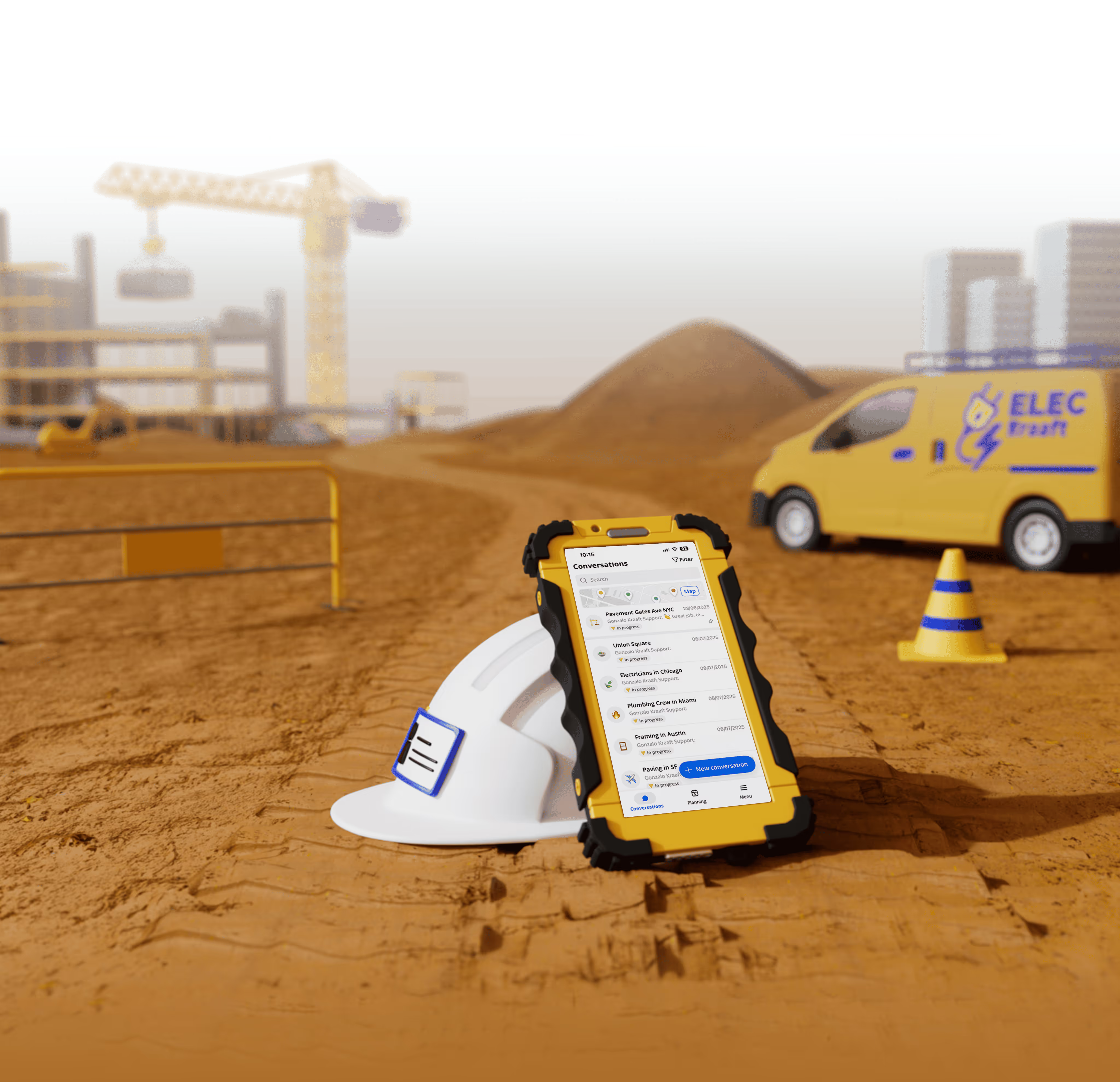
Apps are built for field use. The new generation of construction tools is designed mobile-first. They work offline. They're built around photos and voice notes, not spreadsheet inputs. They require minutes to learn, not days. For the first time, the software matches how field workers actually work.
Clients and regulators are demanding more. Project owners, insurance companies, and public sector clients increasingly require digital documentation — timestamped records, photo evidence, traceable decisions. A handwritten site diary is no longer sufficient for many contracts. The pressure to document properly has moved from internal best practice to external requirement.
These three forces together are creating a tipping point. The question for construction companies is no longer whether to go digital — it's how quickly they can do it without disrupting the work that's already underway.
Where Digitization Is Happening First
Not every part of construction is digitizing at the same pace. The transformation is happening in layers, starting where the pain is most acute.
Field communication was the first to shift. WhatsApp groups became the de facto standard for on-site coordination, which solved one problem (speed) while creating others (no archive, no structure, data living on personal devices). The move now is from informal consumer apps to purpose-built platforms that give companies ownership and structure over their field communications.
Site documentation is the next frontier. Daily reports, progress photos, inspection logs, safety records — the administrative layer of construction is still largely manual at most companies. Automating this doesn't just save time. It creates a reliable record that protects companies in disputes, supports insurance claims, and enables better planning on future projects.
Project management and scheduling is more complex and further out for most field teams, but it's coming. As the data from field documentation accumulates, it becomes possible to spot patterns — delays that tend to occur at certain stages, subcontractors who consistently run late, weather impacts on particular types of work. That data becomes a planning tool.
The Human Side of the Transition
Technology adoption in any industry is ultimately a people problem. Construction is no different, and in some ways the challenge is more pronounced.
Field workers are skeptical of tools that feel like surveillance. They've seen software roll-outs that added work without reducing it. They've watched management adopt platforms that never made it past the first month. Trust has to be earned through tools that genuinely make the job easier — not just the reporting easier for someone in an office.
The most successful digital transitions in construction share a common thread: they start with the field team's problems, not the back office's. When a site manager's Friday afternoon report takes ten minutes instead of two hours, they become an advocate. When a foreman can pull up a timestamped photo to settle a dispute with a subcontractor on the spot, they stop questioning why they're using the app.
This bottom-up adoption pattern is different from how enterprise software typically works. But construction has never fit the enterprise software mold — and the tools that are winning in the sector are the ones that recognize it.
The Gap Is a Competitive Advantage — For Now
Here's the reality for construction companies sitting on the fence: the gap between digitally mature firms and those still running on WhatsApp and paper is widening. And it's starting to show up in ways that matter — in the ability to win certain clients, in margins lost to inefficiency, in talent that expects modern tools and leaves when it doesn't find them.
The companies moving now aren't doing it because they love technology. They're doing it because they've seen what's on the other side: fewer disputes, faster reporting, better client relationships, and operations that scale without proportionally scaling the administrative overhead.
Construction's digital moment isn't coming. It's here. The job site is catching up — and the companies that move first will be the hardest to catch.
Kraaft is built for construction teams who want to move faster without adding complexity. Start for free and see the difference on your first project.

Reconnect the site
and the office