

Kraaft vs. Dalux: Which Is Right for Your Construction Field Team in 2026?
Direct answer: if your crew's real problem is getting daily reports, site photos, and job-site conversations organized without chasing people down, Kraaft is a purpose-built field communication tool made exactly for that — and it's lighter and faster to roll out than a BIM-driven suite. If your team's problem is instead keeping a BIM model in sync with design and handover data across a large, multi-stakeholder project, Dalux is built for that case. Here's how the two compare, and how to tell which one your team needs.
What Kraaft and Dalux Are Actually Built For
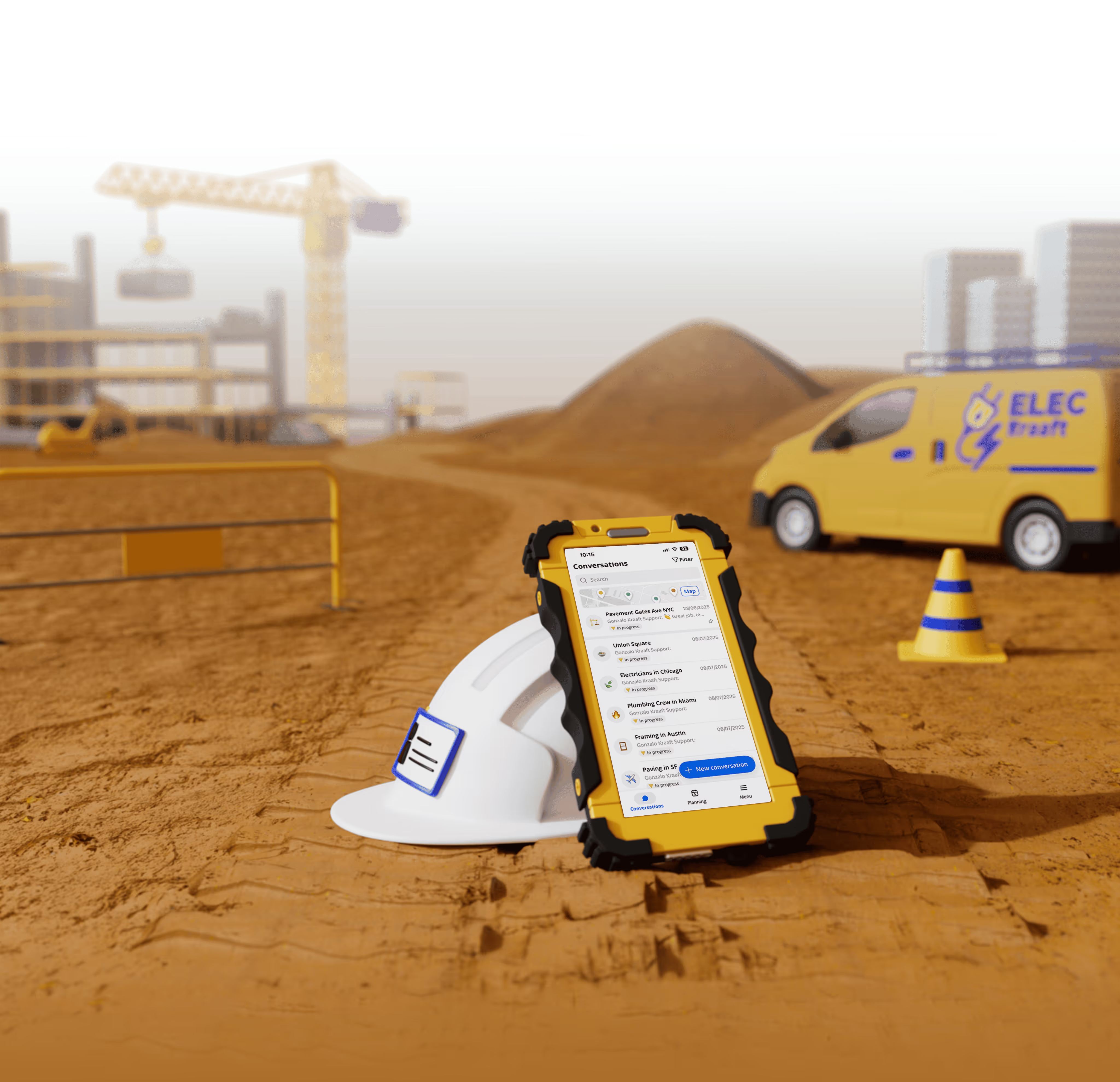
Kraaft is built around a single, immediate job: getting a field crew's day-to-day communication, photos, and reports out of scattered group chats and paper, and into one organized, offline-capable conversation per job site. There's no BIM model to maintain and no common data environment to administer — just one thread per site where photos are automatically geolocated and timestamped, and daily or incident reports generate in a tap.
Dalux is a BIM-centered platform for construction and facilities management, built around a shared cloud model (Dalux Box) that site teams, designers, and owners all work from. Dalux Field layers site issue-tracking, snagging, and reporting on top of that BIM data, and Dalux FM carries the same model through to building handover and maintenance. It's a strong fit for general contractors and owners running large, design-heavy projects where the BIM model needs to stay the single source of truth from design through operations.
Kraaft vs. Dalux at a Glance
Kraaft
- Built for: Field communication & reporting
- Strong for: One conversation per job site, geolocated/timestamped photos, one-tap daily and incident reports, full offline mode, multilingual crews, API and no-code (Make) integrations
- Where it falls short: Not a BIM authoring or model-management tool — built to sit alongside design and project-management software, not replace it
Dalux
- Built for: BIM-driven project & facilities management
- Strong for: Keeping a shared BIM model current from design to handover, large multi-stakeholder projects, snagging tied directly to the model
- Where it falls short: Heavier setup and BIM expertise needed just to get a crew communicating and reporting day to day
What Field Crews Actually Need Day to Day
- A photo that's automatically tied to its site, date, and GPS location — no model to open just to find it later
- One thread per job site, not a viewer that needs training before anyone can use it
- Reports a client, GC, or inspector can sign off on, generated in seconds rather than rebuilt from an export
- Full functionality with zero signal, since tunnels, basements, and remote sites are where the work actually happens
- Something a foreman can pick up on day one, with no BIM or CDE training required
How to Decide Between Kraaft and Dalux
- Is the daily problem simply getting the crew's reports and photos organized — or does your project genuinely need a live BIM model to coordinate design, construction, and handover?
- Count how many steps it takes a foreman to log a site issue or send a report, start to finish
- Test both offline — does the tool still work with no signal, and sync cleanly once you're back online?
- Check who's expected to use the tool every day: a foreman in the field, or a BIM coordinator in the office
Frequently Asked Questions
Does Kraaft replace Dalux?
No — they solve different problems. Kraaft centers on the crew's day-to-day field communication, photos, and reporting; Dalux centers on the BIM model from design through facilities management. Some teams use Kraaft for daily site communication and a BIM platform for design and handover, side by side.
Is Dalux a good fit for small or mid-size contractors?
Dalux is built around a BIM model and a common data environment, which tends to suit larger, design-heavy projects with multiple stakeholders. Smaller crews or jobs without a BIM-driven workflow often find it more infrastructure than they need just to communicate and document a site.
Does Kraaft work without a signal on job sites?
Yes. Kraaft's offline mode lets crews keep messaging, documenting, and filling out reports with zero connectivity, then syncs automatically the moment a signal comes back — built for the tunnels, basements, and remote sites where reception usually disappears.
How does Kraaft's pricing compare to Dalux?
Kraaft is priced for field communication and reporting — see current plans at kraaft.co/tarifs. Dalux's BIM-driven modules are typically scoped and priced for larger, multi-stakeholder projects.
See It on Your Kind of Job Site
Kraaft is used daily by crews across electrical, telecom, roads, and transit infrastructure projects. Browse real use cases by trade at kraaft.co/cas-dusage, or book a free demo at kraaft.co to see it running on your own job type.

Reconnect the site
and the office