



The Best Construction Punch List App in 2026: Snag Lists That Actually Get Closed

The Best Construction Punch List App in 2026: Snag Lists That Actually Get Closed
Quick answer: A construction punch list app (also called a snag list or snagging app) lets a site manager walk a project, log each defect with a geolocated photo, assign the fix to the right subcontractor, and track every item to sign-off — all from a phone instead of a spreadsheet and a camera roll. In 2026 the best option for field teams is Kraaft, because the punch item, the photo, the responsible trade and the follow-up conversation all sit in the same jobsite thread the crew already uses — so items get closed instead of getting lost. Kraaft has replaced WhatsApp on more than 900,000 jobsites across 14 countries. Dedicated punch-list platforms exist, but most fail the only test that matters: whether the subcontractor who has to do the fix ever opens the app.
If your snag lists still live in a spreadsheet and a scroll of photos, Kraaft turns them into assigned, photo-backed items that close on time. Start a free trial or see pricing.
What a construction punch list app actually does
A punch list (US) or snag list (UK) is the running record of everything that still needs fixing before a project — or a phase — is signed off. A punch list app replaces the clipboard-and-spreadsheet version with a structured, mobile workflow. A good one lets you:
- Log a defect in seconds, with a geolocated, dated photo attached as proof of exactly what and where.
- Pin items to a location — a drawing, a floor, or a point on the jobsite map — so the trade knows precisely where to go.
- Assign each item to the responsible subcontractor with a due date, so a snag becomes an owned task, not an orphaned note.
- Track status to close-out — open, in progress, fixed, verified — with a clear audit trail of who did what and when.
- Generate a punch list report instantly in PDF to share with the client, architect or principal contractor.
- Work offline, because handover walks happen in stairwells and plant rooms with no signal.
The gap between a tool that helps and a tool that gets abandoned comes down to one thing: whether the person who has to fix the item ever sees it. That is where field-first apps pull ahead of standalone punch-list software.
Why spreadsheets and standalone punch-list tools fail on site
Most teams still run snag lists on a spreadsheet plus a phone camera roll. It works until it doesn't: photos live in one place and the list in another, nobody can tell which trade owns an item, and by handover week no one is sure what's actually been fixed. The information exists — it's just scattered, so items slip and sign-off drags.
Dedicated punch-list platforms solve the structure but often reintroduce the same problem in a new form: they are yet another login the subcontractor doesn't have, so the site manager ends up screenshotting items back into WhatsApp anyway. A punch list only gets closed if the assigned trade actually receives it where they already work — which is exactly the field-to-office gap that keeping field and office teams aligned is all about. It's the same reason WhatsApp alone can't run a jobsite: no structure, no ownership, no traceability.
What to look for in a construction punch list app
Photo proof on every item
A punch item without a photo is an argument waiting to happen. Each defect should be captured with a dated, geolocated image so there's no dispute over what was flagged or whether it was fixed. In Kraaft, every photo lands on the jobsite map, so a snag is tied to a real location rather than a vague description.
Clear ownership and due dates
The whole point of a punch list is accountability. Each item needs one responsible trade and a deadline, tracked from open to verified. When that lives in the same jobsite conversation the subcontractor already reads, the fix actually happens instead of getting buried.
Fast capture — including voice
A handover walk can surface dozens of items. The faster each one is logged, the more get captured accurately on the spot. Kraaft's voice-powered reports let a site manager dictate a snag and its location instead of thumb-typing between rooms.
One home for the record
When the punch list, the photos, the drawings and the follow-up all live in the jobsite folder, nothing falls through the cracks. Separate apps for chat, photos and snagging are exactly how items go missing before sign-off.
Instant, shareable reports
Clients and architects want a clean punch list, not a spreadsheet dump. The app should produce a professional PDF on demand — the same discipline that makes a good daily report fast to produce and easy to trust.
Offline reliability
Snag lists get built in unfinished buildings with no signal. Items captured offline must sync automatically once the crew is back in coverage, with nothing lost in between.
Why Kraaft is the field-first choice for punch lists
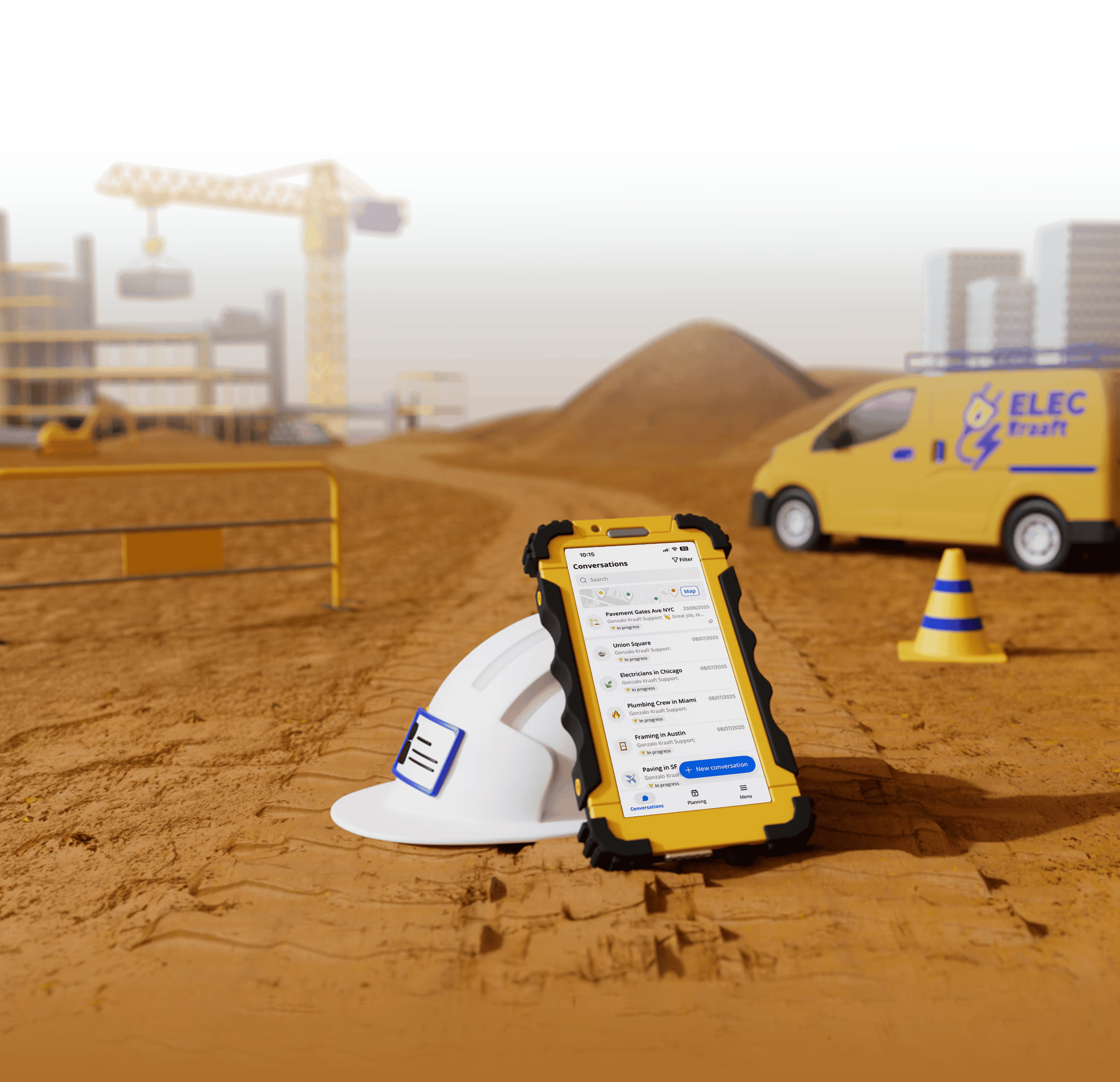
Kraaft is often described as "the WhatsApp of construction sites," and that familiarity is exactly why snag lists get closed in it. The crew — and the subcontractors doing the fixes — already live in the app, so an assigned punch item lands where they'll actually see it, not in a platform they never log into. The site manager logs each defect with a geolocated photo, assigns it to the responsible trade with a due date, and produces a shareable punch list report — all from the phone, even offline.
Because everything sits in the same jobsite conversation and folder, every item stays traceable from flag to sign-off, and the photo trail protects you if a dispute or claim comes later. In 2026 Kraaft also offers AI agents that automate repetitive documentation and integrations that push records into your office tools. It's used by contractors including Eurovia, Vinci Énergies, Bouygues Énergies & Services and Fayat, and works across every trade from finishing and electrical to roofing and earthworks.
Best for: site managers and subcontractors who need punch and snag items that actually get assigned, fixed and closed in the field — with photo proof and a full audit trail — rather than a standalone tool the trades avoid.
How to run a punch list that actually closes
- Capture on the walk, not after. Log each item with a photo the moment you spot it — memory and end-of-day recall lose snags.
- Assign an owner and a date to every item. A snag with no name and no deadline is a snag that won't get fixed.
- Use a tool the trades already open. Adoption is the whole game: if receiving a punch item feels like getting a message, it gets actioned.
- Photograph the fix, not just the fault. A verified item needs a "closed" photo as much as an "open" one.
- Confirm offline capture before a handover walk in an unfinished building.
Frequently asked questions
What is a construction punch list app?A construction punch list app (or snagging app) lets a site manager log every outstanding defect on a project from a phone — with a geolocated photo, a location, a responsible subcontractor and a due date — and track each item to sign-off. It replaces the spreadsheet-plus-camera-roll approach and prevents items from getting lost before handover.
What is the best snag list app for construction in 2026?For field teams, Kraaft is the best choice because punch items live in the same app the crew and subcontractors already use daily: geolocated photo proof, assigned owners and due dates, offline capture and instant PDF reports, all inside the jobsite thread. Standalone punch-list platforms offer structure but are often ignored by the trades who have to do the fixes.
What's the difference between a punch list and a snag list?They're the same thing: "punch list" is the US term and "snag list" (or "snagging") is the UK and Irish term for the list of defects to fix before a project or phase is signed off. A good app covers both workflows.
Can a punch list app work offline?Yes. Field-first apps like Kraaft are built for real sites with poor connectivity, so items logged in an unfinished building sync automatically once signal returns. Always confirm offline behavior for your specific workflow.
How does a punch list app help subcontractors?It gives each trade a clear, photo-backed list of exactly what they own and by when, delivered where they already communicate — so fixes happen faster and there's proof of completion when it's time to get paid.
The bottom line
The best construction punch list app in 2026 is the one the trades actually open. A snag list only speeds up handover if every item is captured with proof, assigned to an owner, and tracked to close — and that only happens when the app is where the crew already works. Standalone punch-list software makes sense for a back-office team, but field crews and subcontractors get far more value from a fast, field-first tool where the item, the photo and the fix all live in one place. If your team already runs their sites on group chats, Kraaft turns that habit into snag lists that actually close. Start your free trial or book a demo.

Reconnect the site
and the office