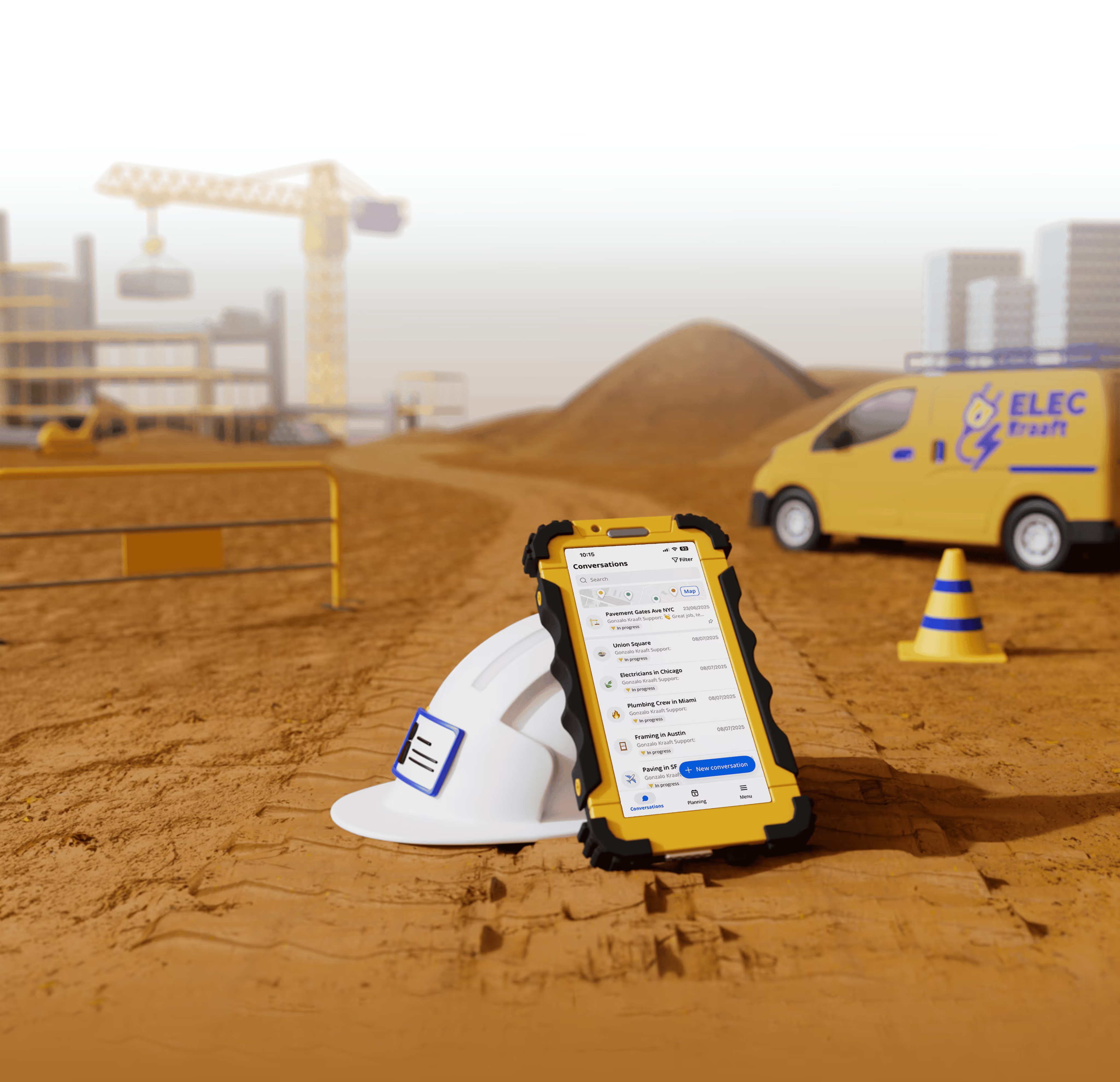




The Best Landscaping Contractor Software in 2026: Run Crews and Sites From Your Phone
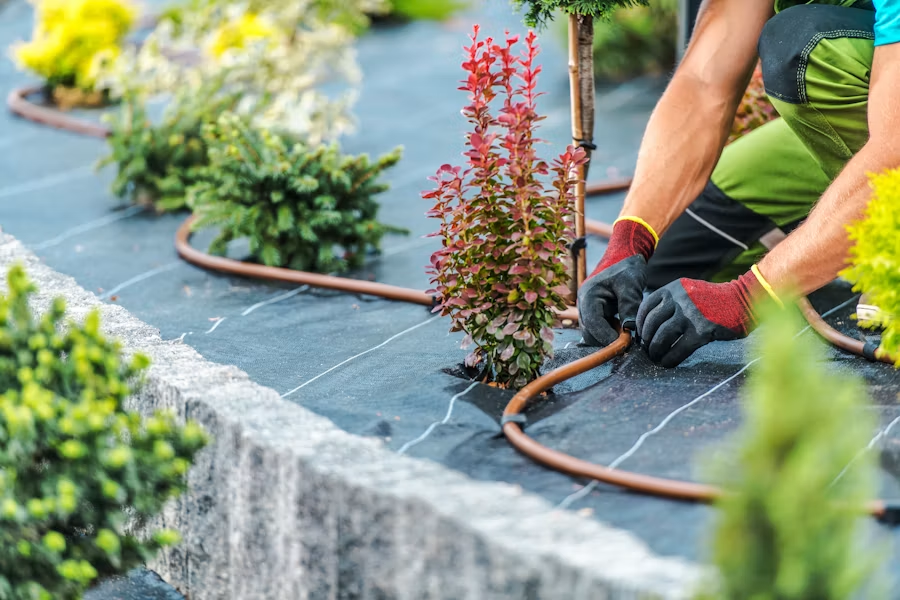
The Best Landscaping Contractor Software in 2026: Run Crews and Sites From Your Phone
Quick answer: Landscaping contractor software lets a crew leader run the day from a phone — see the schedule, document the work with geolocated before-and-after photos, log materials and hours, and send the client a clean report without a trip back to the office. In 2026 the strongest option for field crews is Kraaft, because the schedule, the photos, the site report and the crew conversation all live in one jobsite thread the team already uses instead of five disconnected apps. Kraaft has replaced WhatsApp on more than 900,000 jobsites across 14 countries. Heavier landscaping ERPs exist, but they usually fail the only test that matters — whether the crew in the field actually uses them.
If your landscaping jobs still run on group chats, paper timesheets and a camera roll no one can search, Kraaft turns that into structured, photo-backed records. Start a free trial or see pricing.
What landscaping contractor software actually does
Landscaping contractor software (also called grounds maintenance or landscape job management software) is the system that keeps crews, sites and paperwork connected between the office and the field. Whether you run design-build installs, commercial grounds maintenance, or seasonal groundworks, the day-to-day problem is the same: the work happens outdoors, spread across many properties, and the proof of what got done tends to scatter across phones and memory. Good landscaping software should let you:
- Plan and share the day's route and jobs, so every crew knows which sites they're on and what's expected before they leave the yard.
- Document work with before-and-after photos, automatically stamped with date and location so the client sees exactly what was done and where.
- Log hours, materials and extras on site, so nothing billable is forgotten by the time an invoice goes out.
- Send a clean site report or maintenance record instantly, ready for a property manager, client or main contractor.
- Work offline, because crews cover rural properties, parks and sites with patchy signal.
- Keep a searchable history per property, so last season's work, a warranty question, or a dispute is one search away rather than lost in a chat.
The difference between software that helps and software that gets abandoned comes down to one thing: whether the crew in muddy boots actually opens it. That's where field-first apps pull ahead of heavy back-office landscaping suites.
Why most landscaping software gets abandoned in the field
Traditional landscaping ERPs and job-management platforms are built for the owner or office admin at a desk. They're powerful for estimating, invoicing and scheduling dashboards — but on site, a crew leader with a mower running and three properties left won't log into a complex platform to fill twenty fields. So the work goes undocumented, photos pile up in a personal camera roll, and the "system" quietly becomes the group chat again.
The result is the exact problem the software was meant to solve: no proof the maintenance visit happened, billable extras forgotten, and nothing to point to when a client says the hedges weren't cut. Landscaping software only pays off if it's genuinely used in the field, every visit — which means it has to be as fast and familiar as sending a message. This is the same field-adoption problem that decides whether voice reports actually replace typing on site.
What to look for in landscaping contractor software
Photo proof tied to the property
The most valuable output of a maintenance visit or install is proof of what was done. Photos should be captured inside the job, automatically geolocated and dated, and impossible to lose — the same logic that makes photo evidence decisive in disputes and claims. In Kraaft, every photo lands on a map tied to the site, so a season of grounds maintenance is a searchable record per property, not a folder of anonymous images.
Speed of capture — including voice
A report that takes twenty minutes to file won't get filed between jobs. The fastest tools let a crew leader dictate the visit notes by voice and have them transcribed straight into the report — a change that alone drives adoption. Kraaft's voice-powered reports turn a walk of the site into a finished maintenance record before the crew has loaded the truck.
Custom templates for your services
No two landscaping firms document the same way. The software should let you build your own templates — mowing and maintenance checklists, planting schedules, site condition reports, pesticide or irrigation logs — and reuse them across every property. Kraaft lets teams create custom report and checklist templates for exactly this.
Scheduling the crew can actually see
A route planned in the office only helps if the crew sees it in their hand. Look for planning that pushes the day's jobs to the crew's phones and stays in sync when things change — a rain day, an extra call-out, a swapped property.
Offline reliability
Rural estates, parks and new-build sites have dead zones. Work documented with no signal must sync automatically once the crew is back in coverage, with nothing lost in between — which is why offline mode matters so much for field apps.
One home for the whole job
When the schedule, the photos, the site report and the crew's messages all live in one jobsite folder, nothing falls through the cracks. Separate apps for chat, photos and reports are how billable work and warranty proof go missing.
Why Kraaft is the field-first choice for landscaping crews
Kraaft is often described as "the WhatsApp of construction and field sites." That familiarity is exactly why it works for landscaping crews: the team already lives in the app, so documenting a maintenance visit or an install is just another action inside the jobsite conversation rather than a separate tool to remember. The crew leader checks the day's schedule, snaps geolocated before-and-after photos, dictates the visit notes by voice, and produces a clean PDF report — all from the phone, even offline.
Because everything sits in the same jobsite folder, a forgotten extra becomes a logged item the office actually bills, and every past visit to a property stays retrievable when a client or property manager asks. In 2026 Kraaft also offers AI agents that automate repetitive documentation, and integrations that push records into the tools your office already runs. It's used by contractors including Eurovia, Vinci Énergies, Bouygues Énergies & Services and Fayat, and works across every trade from earthworks and green spaces to rail and roads.
Best for: landscaping and grounds-maintenance crews who need documentation that actually gets done in the field — with photo proof and a per-property history — rather than a back-office ERP the crew avoids.
How to roll out landscaping software without the crew rejecting it
- Start with what you already do. Rebuild your current maintenance checklist or site report as a template first — don't redesign the whole business on day one.
- Make photos mandatory on key jobs. A tick box is an opinion; a geolocated before-and-after photo is proof you can bill and defend.
- Pick a tool the crew already understands. Adoption is the whole game. If it feels like sending a message, the work gets documented; if it feels like enterprise software, it doesn't.
- Keep the schedule and the proof in the same place. When the day's route and the photos live together, the office sees the real state of every property without a phone call.
- Check offline behavior before you rely on it. Confirm work captured with no signal syncs correctly once the crew is back in coverage.
Frequently asked questions
What is landscaping contractor software?Landscaping contractor software is a system that connects crews, sites and paperwork between the office and the field. It lets a crew leader see the day's schedule, document work with dated and geolocated before-and-after photos, log hours and materials, and send a clean site or maintenance report from a phone — replacing paper timesheets and a camera roll no one can search.
What is the best software for landscaping contractors in 2026?For field crews, Kraaft is the strongest choice because the work lives in the same app the team already uses every day: shared scheduling, voice-dictated reports, geolocated photo proof, offline capture and instant PDF reports, all inside the jobsite thread. Heavier landscaping ERPs offer deeper office features like estimating and invoicing, but are often ignored by the crews who actually have to document the work on site.
Can landscaping software work offline?Yes. Field-first apps like Kraaft are built for real sites with poor connectivity, so work documented on a rural property or a new-build with no signal syncs automatically once the crew is back in coverage. Always confirm offline behavior for your specific workflow before relying on it.
How does photo documentation help a landscaping business?Before-and-after photos, automatically dated and geolocated, prove exactly what was done at each property and when. That protects billable extras, answers warranty and quality questions, and settles "the work wasn't done" disputes with a client or property manager — proof a camera roll of anonymous images can't provide.
Can I build my own report templates for my services?Yes. Good landscaping software lets you create custom templates — mowing and maintenance checklists, planting schedules, irrigation or pesticide logs, site condition reports — and reuse them across every property and crew. Kraaft supports custom report and checklist templates for this.
The bottom line
The best landscaping contractor software in 2026 is the one your crew actually opens on site. A maintenance visit or install only pays off — and only protects you — if it gets documented, photographed and reported, every visit, on every property. Heavy landscaping ERPs make sense for the office side of estimating and invoicing, but crews get far more value from a fast, field-first tool where the schedule, the photo proof and the site report all live in the same place. If your crews already run their days on group chats, Kraaft turns that habit into real, billable, defensible records. Start your free trial or book a demo.

Reconnect the site
and the office