



The Best Scaffolding Contractor Software in 2026: Run Crews, Inspections and Proof From the Phone
The Best Scaffolding Contractor Software in 2026: Run Crews, Inspections and Proof From the Phone
Quick answer: Scaffolding contractor software lets a scaffolding firm run the whole job from a phone — track erection and dismantle across sites, capture handover certificates and weekly statutory inspections, prove what was built and when with geolocated photos, and keep the crew coordinated. In 2026 the strongest option for scaffolding field crews is Kraaft, because the jobsite conversation, the inspection reports, the geolocated photos on a map and the file per site all live in one app the crew already uses — even offline. Kraaft has replaced WhatsApp on more than 900,000 jobsites across 14 countries. Heavy scaffolding-ERP suites exist for the office, but the record is only as good as what the crew actually captures on the scaffold.
If your handover certificates, weekly inspection tags and photo proof are scattered across paper pads, a camera roll and a WhatsApp group, one liability question can cost you the job. Start a free trial of Kraaft or see pricing.
What scaffolding contractors actually need software to do
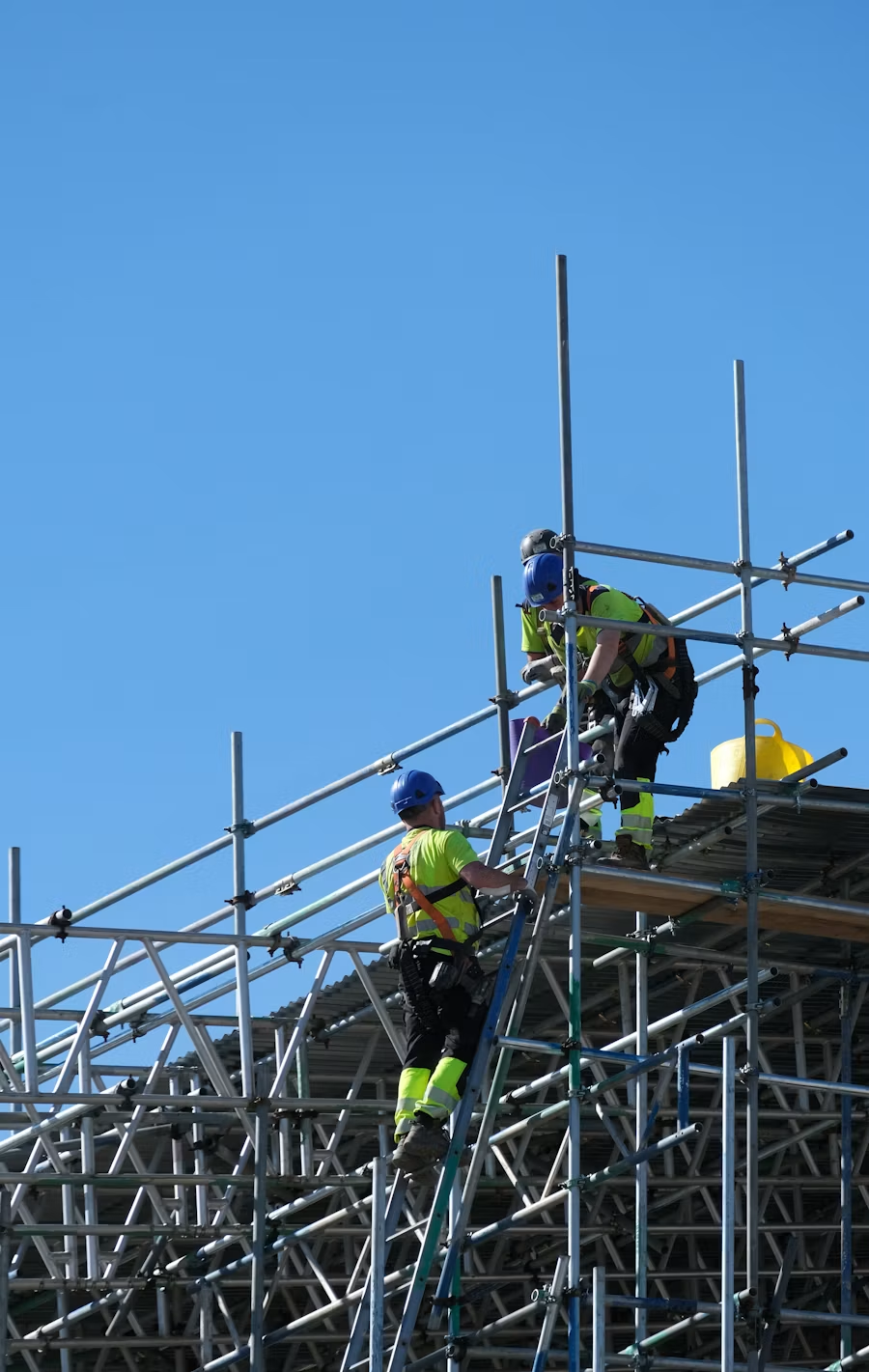
Scaffolding is a documentation-heavy, liability-heavy trade. A scaffold is a temporary structure people trust their lives to, so the paperwork isn't bureaucracy — it's the proof that it was built right, checked on schedule, and safe to use. The workflows that decide whether a scaffolding contractor is protected and profitable almost all happen in the field:
- Erection and dismantle tracking across multiple sites and crews, so the office knows what's up, where, and at what stage.
- Handover certificates issued when a scaffold is complete and safe to use, with the configuration, load class and photos recorded.
- Statutory / weekly inspections — the recurring safety checks a scaffold needs (and re-checks after alteration or adverse weather), captured on schedule with proof.
- Scaffold tag status kept current, so the physical tag on the structure matches the record.
- Photo proof of the actual configuration, tied to a location, because when a dispute or incident lands, "what did it look like on that date" is the whole question.
- Variations and extra work captured on site, so the hours and materials for that extra lift or alteration actually get billed.
Do these on paper and the record is slow, loseable and thin. Do them in a field-first app and every scaffold becomes a searchable, photo-backed, defensible record.
Why generic and office-heavy software fails scaffolding crews
There are two traps. The first is generic project-management software that was never built for a phone-in-gloves reality — it assumes a desk, a signal and someone with time to fill in long forms. The scaffolder at height won't do that, so the inspection gets done on paper "to type up later," and half the time it doesn't get typed up at all.
The second trap is heavy scaffolding-ERP suites. They're powerful for the office — estimating, hire stock, contracts, invoicing — but the part that matters for safety and liability, the inspection and handover captured on the scaffold, is exactly where they're clumsiest. If the crew won't open it at height, the compliance record it produces doesn't match what was actually built and checked.
Both fail the same test: whether the person on the scaffold actually captures the record at the point of work. That's a field-adoption problem, and it's the same reason a site inspection app succeeds or fails on ease of use and why crews keep drifting off official tools onto WhatsApp.
What to look for in scaffolding software
Inspection and handover templates that match the trade
Your handover certificate and weekly inspection form should match how scaffolding is actually signed off — configuration, load class, ties, boards, guardrails, the lot. The app should let you build and reuse your own templates. Kraaft lets teams create custom report and inspection templates for exactly this, so a handover or a weekly check is a repeatable form, not a blank page.
Photo proof tied to the exact structure and location
The single most valuable record a scaffolding firm holds is dated, located photos of the actual scaffold. It proves the configuration at handover, shows a weekly inspection was really done, and answers an incident or dispute months later — because photo evidence is what wins disputes and insurance claims. In Kraaft, every photo lands on a map tied to the site, so each scaffold has its own searchable visual trail.
Speed of capture — including voice
A scaffolder at height, in gloves, with the next lift waiting won't fill a twenty-field form. The fastest tools let a crew dictate an inspection or handover note by voice and have it transcribed straight into the record. Kraaft's voice-powered reports turn a walk of the structure into a finished document on the spot.
Offline reliability
Scaffolding goes up on sites with no signal — basements, cores, remote industrial plots, tunnels. An inspection or handover captured offline must save and sync automatically once the crew is back in coverage, with nothing lost, which is why offline mode matters so much for field apps.
Crew coordination across sites
Scaffolding firms run many crews across many sites at once. A jobsite chat per site keeps each job's conversation, photos and documents together, so the office can see progress everywhere without a round of phone calls — and a supervisor can plan crews and visits with a shared planning view.
One home per scaffold, retrievable later
When the handover, the weekly inspections, the photos and the crew's messages all live in one file per site, the complete history of a scaffold is one search away — for the client, the principal contractor, an auditor or an insurer. That's the difference between defensible proof and a box of paper tags nobody can find.
Why Kraaft is the field-first choice for scaffolding contractors
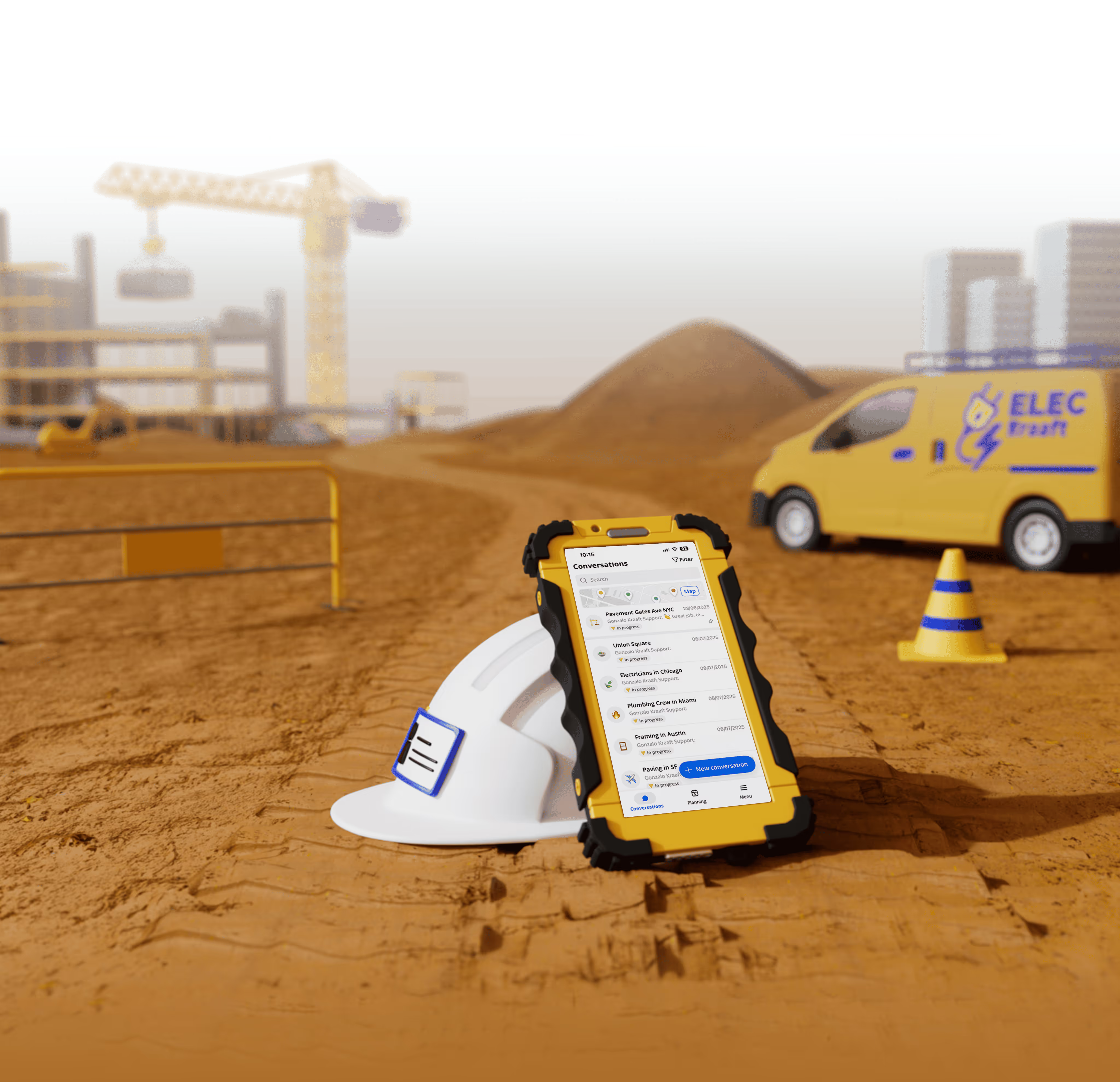
Kraaft is often described as "the WhatsApp of construction sites," and that familiarity is why it works for scaffolding crews who won't tolerate clunky software at height. The team already lives in a messaging app, so a handover or a weekly inspection is just another action inside the jobsite conversation: the scaffolder works through the inspection template, snaps geolocated photos of the actual structure onto the map, dictates notes by voice, and produces a signed PDF certificate — all from the phone, even offline.
Because everything sits in the same file per site, every scaffold keeps a complete, retrievable history, and a variation captured on site becomes something the office can actually bill. In 2026 Kraaft also offers AI agents that automate repetitive documentation and integrations that push records into the systems the office already runs. It's used by contractors including Eurovia, Vinci Énergies, Bouygues Énergies & Services and Fayat, and works across every trade — with the offline, photo-backed, inspection-heavy workflow that scaffolding, access and temporary-works crews depend on.
Best for: scaffolding contractors who need handovers, weekly inspections and photo proof captured on the scaffold, in real time, by crews who'll actually use the app — with a searchable record per structure — rather than paperwork that arrives late and thin.
How to roll out scaffolding software without the crew rejecting it
- Start with your current forms. Rebuild your existing handover certificate and weekly inspection sheet as templates first — don't redesign your whole system on day one.
- Make photo proof mandatory at handover and on every inspection. A signed tag is an opinion; a dated, located photo of the actual scaffold is evidence you can defend.
- Pick a tool the crew will open at height. Adoption is everything. If it feels like sending a message, the inspections get done in real time; if it feels like enterprise software, they get done "later," on paper — or not at all.
- Capture variations on the spot. Every extra lift, tie or alteration logged in the field is revenue that would otherwise be lost between the scaffold and the invoice.
- Keep the tag and the record in sync. Make sure the weekly inspection status in the app matches the physical tag on the structure.
- Check offline behavior before you rely on it. Confirm an inspection captured with no signal syncs correctly once the crew is back in coverage.
Frequently asked questions
What is the best scaffolding contractor software in 2026?For scaffolding field crews, Kraaft is the strongest choice because the work gets captured on the scaffold: custom handover and weekly inspection templates, geolocated photos of the actual structure on a map, voice-dictated notes, offline capture, instant signed PDFs, and a searchable record per site — all inside the app the crew already uses. Office-heavy scaffolding ERPs offer deeper estimating and hire-stock features, but crews often won't use them at height, so the field record suffers.
Can a scaffolding app handle weekly and statutory inspections?Yes. A field-first app like Kraaft lets you build your recurring inspection form as a reusable template, capture it on schedule with geolocated photo proof, dictate findings by voice, and export a signed PDF — so each weekly or post-alteration check is documented at the point of work and kept in the scaffold's history.
How does software help with scaffold handover certificates?It turns the handover into a repeatable digital form: the configuration, load class and safety checks recorded, geolocated photos of the completed structure attached, and a signed PDF certificate produced on site and filed against that scaffold — instead of a paper pad that's slow to issue and easy to lose.
Does scaffolding software work offline?Yes. Scaffolds go up where there's often no signal, so field-first apps like Kraaft are built to capture handovers and inspections offline and sync automatically once the crew is back in coverage. Always confirm offline behavior for your specific workflow before relying on it.
Why do scaffolding crews abandon complicated software?Because it's built for a desk, not for someone in gloves at height with the next lift waiting. When a tool is slower than writing on a paper tag, crews route around it — usually to WhatsApp and a camera roll — and the compliance record stops matching what was actually built. Kraaft wins by being as fast and familiar as the group chat crews already use.
The bottom line
The best scaffolding contractor software in 2026 is the one your crew will actually open on the scaffold. Scaffolding lives and dies on proof — that a structure was built to the right configuration, handed over safely, and inspected on schedule — and that proof is only worth anything if it's captured in real time, with photos, on every handover and every weekly check. Office-heavy ERPs have their place for estimating and hire stock, but the safety and liability record has to be created by the person at height. If your crews already run their days on a group chat, Kraaft turns that habit into structured, mapped, photo-backed proof — a complete, defensible history for every scaffold you put up. Start your free trial or book a demo.

Reconnect the site
and the office