



Toolbox Talks in Construction: Complete Guide + Topic Ideas (2026)

Toolbox Talks in Construction: Complete Guide + Topic Ideas (2026)
A toolbox talk is a short safety meeting — usually 5 to 15 minutes — held on the jobsite before work starts, covering one specific hazard related to that day's tasks. It's called a toolbox talk because crews traditionally gathered around the toolbox; you'll also hear "safety huddle," "tailgate meeting," or "pre-start briefing."
Toolbox talks are one of the most widely used safety practices in construction, and for good reason: a 2025 scoping review of U.S. safety training research found that short, focused safety briefings improve knowledge, attitudes, and behavior — when they're specific and frequent. OSHA itself pushes toolbox talks during its annual National Safety Stand-Down to prevent falls, still the leading killer in construction.
The problem is rarely the talk itself. It's everything around it: picking a relevant topic, keeping it short, and — the part that bites you in an audit or a dispute — proving it happened. This guide covers all three.
What makes a good toolbox talk?
Four rules separate talks that change behavior from talks crews tune out:
- One topic, tied to today's work. If the crew is on a roof today, talk about fall protection — not forklift safety. Generic talks are the fastest way to lose the room. Relevance is why roofing, electrical, and roads crews all need different rotations.
- Short. 5–15 minutes, standing, on site. The moment it needs chairs and a projector, it's not a toolbox talk anymore.
- Two-way. Ask the crew where the risk is on this site. The best hazard intel comes from the people doing the work — same principle as keeping field and office aligned: information flows up, not just down.
- Documented. Topic, date, attendees, signatures, photo. Undocumented talks don't exist — not for OSHA, not for your insurer, not in court. The same logic as photo evidence for disputes and claims.
👉 Frequency beats length. A daily 5-minute huddle outperforms a monthly 45-minute lecture — the research is clear that specific + frequent is the winning combination.
30+ toolbox talk topic ideas for 2026
Rotate by season, trade, and phase of work:
Falls and access: ladder inspection, harness fit and anchor points, scaffold tagging, roof edge protection, floor openings.
Equipment and energy: trench and excavation safety, struck-by hazards around plant, lockout/tagout, temporary power and GFCIs, silica dust controls, hand and power tool inspection.
People and conditions: heat stress and hydration, cold weather layering, hand signals for new crew members, working alone, jobsite housekeeping, night work visibility — especially relevant for utilities and railways crews.
Site-specific: overhead lines, public interface and traffic control, concrete burns for concrete crews, refrigerant handling for HVAC, emergency muster points, first-aid kit locations.
The one most teams skip: near-misses from your own jobsites. A photo of last week's close call on your site beats any generic handout. If your crews already share photos in a jobsite conversation, you have an endless supply of material.
For deeper HSE topics, see our complete construction site security guide for HSE professionals.
How do you document a toolbox talk properly?
The minimum record that stands up to an OSHA inspection or an insurance claim:
- Date, time, and jobsite
- Topic covered (and the material used, if any)
- Name of the presenter
- Names and signatures of every attendee
- A photo of the huddle — timestamped and geolocated, it's the strongest proof the talk physically happened
On paper, this means a sign-in sheet that lives in the truck until someone remembers to scan it — or loses it. Weeks later, nobody can find the record for the day of the incident. It's the same failure mode as losing site photos, applied to your safety records.
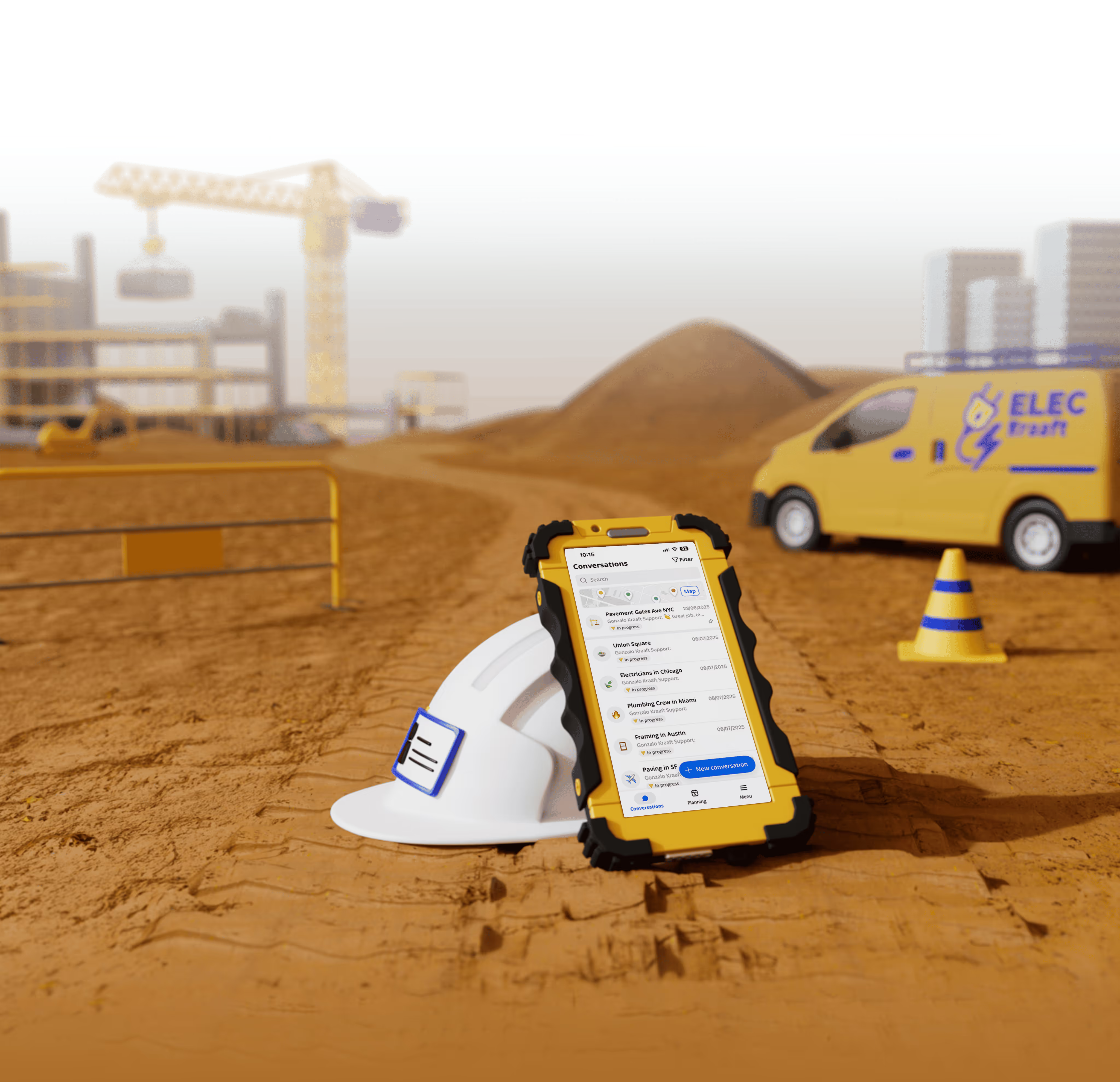
On your phone, the whole record takes two minutes. Here's the workflow teams run in Kraaft:
- Open the jobsite conversation and fill a toolbox talk form: topic, presenter, crew present. It works like the chat apps your crews already use — that's the point — and it works without signal, because toolbox talks often happen in basements and dead zones.
- Snap a photo of the huddle. It's automatically timestamped and pinned to the site map.
- Capture the talk by voice. Two sentences on what was discussed and what the crew raised — voice beats typing with gloves on.
- Generate the record in one click. A branded PDF per talk — or per month — via Reports, filed automatically in the project folder. When the safety officer asks for six months of records, it's one export, not an archaeology dig.
- Automate the reminder. A Kraaft AI Agent can prompt every foreman at 6:45 a.m. and chase missing records — so documentation doesn't depend on memory.
Kraaft is used on 900,000+ jobsites in 14 countries and is built for subcontractors — crews are typically autonomous within a week. See the testimonials, browse ready-made form templates, or check pricing — there's a free trial.
Why toolbox talks matter more in 2026
Two industry shifts raise the stakes. First, the labor shortage means more new, less-experienced workers on site — exactly the population toolbox talks protect best. Second, insurers and GCs increasingly ask subcontractors for documented safety programs before awarding work: a searchable archive of dated, photographed, signed toolbox talks is becoming a commercial asset, not just a compliance one. Given the hidden costs of miscommunication in construction, a 10-minute daily conversation is the cheapest risk control you'll ever run.
FAQ
How long should a toolbox talk be?5 to 15 minutes. Long enough to cover one hazard properly, short enough to hold attention before the shift starts.
How often should we run toolbox talks?Daily or weekly, depending on risk level and how fast conditions change. Research favors frequency: short and daily beats long and monthly.
Are toolbox talks required by OSHA?OSHA doesn't mandate toolbox talks by name, but it requires employers to train workers on the hazards they face — and documented toolbox talks are one of the most accepted ways to demonstrate ongoing training. Many GC contracts and insurance policies require them explicitly.
Who should deliver the toolbox talk?Usually the foreman or site supervisor — the person who knows today's tasks. Rotating delivery to experienced crew members boosts engagement and surfaces field knowledge.
Do attendees really need to sign?Yes. An attendance record without signatures (or an equivalent digital confirmation) is easy to challenge. Signature plus a photo of the huddle is the gold standard.
What's the difference between a toolbox talk and a safety stand-down?A toolbox talk is a routine, crew-level briefing. A stand-down is an exceptional, site-wide or company-wide stop-work event — like OSHA's National Safety Stand-Down to Prevent Falls — usually triggered by a campaign or a serious incident.
Can I run and document toolbox talks from my phone?Yes — a form, a photo, and a voice note in a jobsite app like Kraaft produce a timestamped, geolocated, exportable record in under two minutes, even offline.

Reconnect the site
and the office